
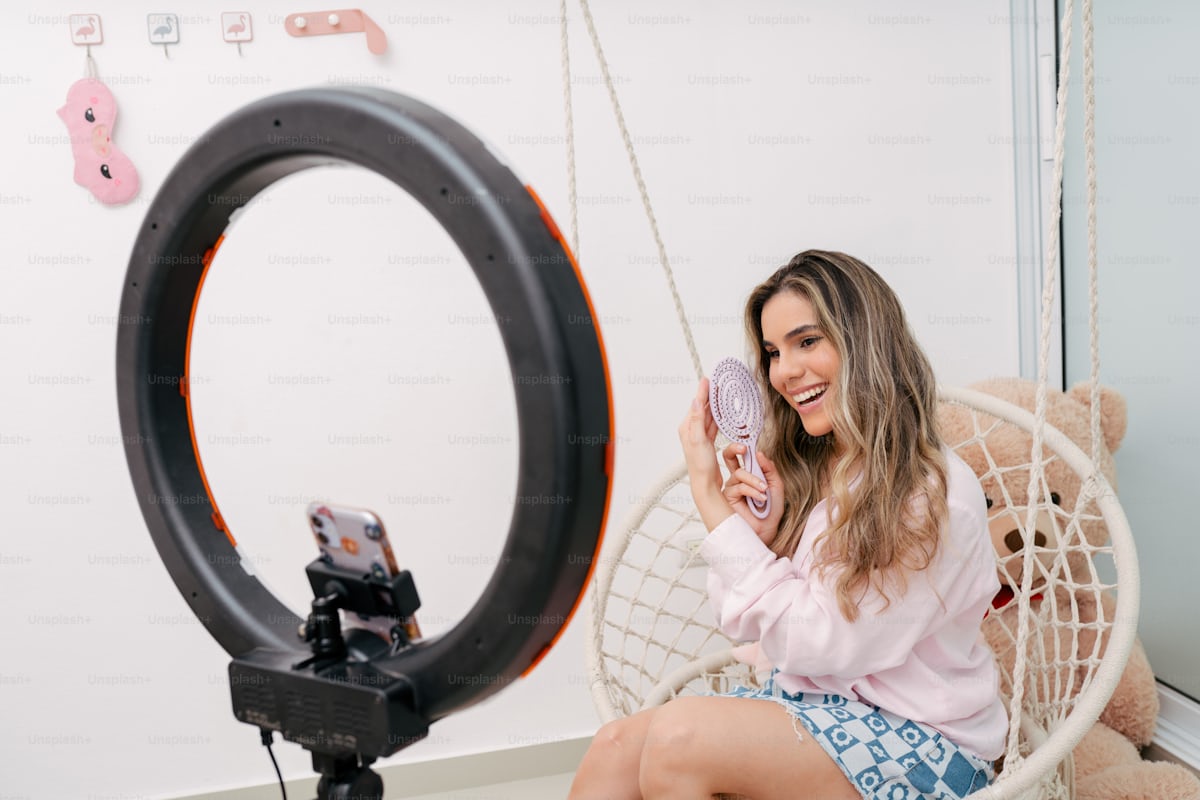
In 2026, the landscape of fame and professional influence has radically shifted. We are no longer solely influenced by distant Hollywood stars; today, our icons are the “Girl Next Door” with 500k followers on TikTok, the career coach hosting weekly LinkedIn Lives, and the beauty vlogger streaming in 4K resolution. This is the era of “Hair Streaming”—a phenomenon where having impeccable, voluminous, and glossy hair is not just a preference, it’s a non-negotiable part of a digital personal brand.
For influencers, creators, and professionals who spend hours in front of a camera, the reality of “camera-ready hair” is a constant battle. The lenses and lighting setups used for streaming can be brutal, making even healthy hair look thin, flat, and dull.
The industry secret that transforms these creators from “average” to “aspirational” in seconds is the seamless integration of clip in hair extensions. This article pulls back the curtain on how top creators use clip-ins to build their digital presence.
The Optical Illusion: Why Your Camera Flattens Your Hair
The relationship between a camera lens and hair is complex. Standard lenses, especially those on front-facing phone cameras, often introduce subtle distortional compression. This compression can make a face look slightly wider, but it frequently has the opposite effect on hair, making it appear thinner and closing off the natural gaps that create depth.
Furthermore, the intense, direct lighting (like a ring light) required for clear video quality can shine directly through fine hair, exposing the scalp and further highlighting a lack of density.
Influencers understand that “on-camera” hair requires roughly 1.5x the density of in-person hair to achieve the same look. This is why clip in hair extensions are the professional choice. They don’t just add length; they add the optical mass required to counteract the camera’s flattening effect, ensuring the hair maintains a lush, dimensional appearance on screen.
The Framing Technique: Creating Depth for Front-Facing Content
Most “Hair Streaming” content—from GRWMs (Get Ready With Me) to professional webinars—is filmed in a portrait (9:16) or square aspect ratio, often featuring only the head and shoulders. This means the most important function of hair is face-framing.
For this type of content, influencers do not focus their extensions at the back of the head. Instead, they use a “lateral placement” strategy. They place smaller 1-clip and 2-clip wefts vertically along the temple and just above the ear, then angle these pieces slightly toward the face.
This creates a bold “curtain” effect that narrows the face optically and adds depth right where the camera focuses. This vertical placement ensures that even if the creator turns their head slightly during a stream, the hair looks uniformly thick.
4K Precision: Why Texture Matching and Hair Quality are Non-Negotiable
As streaming quality has advanced from 1080p to 4K and 8K, the margin for error with extensions has vanished. On a standard definition stream, a slightly mismatched texture or a low-grade synthetic sheen might go unnoticed. In 4K, these discrepancies are painfully obvious, breaking the “illusion” of natural beauty that many creators build their brand upon.
Luvme Hair has become a favorite among discerning creators specifically because of its commitment to 100% human hair. Quality human hair, unlike synthetic, reflects light the same way natural hair does—softly and organically. This is critical when you have a 3-point lighting setup (Key Light, Fill Light, and Backlight) glaring at you. Human hair ensures the extensions don’t look “plastic” or over-shiny, blending into a singular, luxurious texture.
Furthermore, texture matching has evolved. Top creators don’t just match “straight to straight.” They match their hair’s density and “weight.” A creator with coarse, natural hair will opt for a Yaki texture clip-in to ensure the density is consistent from root to tip, whereas a creator with very fine hair will choose a seamless, silk-straight set to prevent the extensions from overwhelming their natural silhouette.
Consistency is Authority: The Business of Having Great Hair
In the digital economy, consistency builds brand trust. If a beauty influencer has massive, bouncy hair in one post and flat, thin hair in a Live stream two days later, the consumer trust in their recommendations is subtly eroded. Clip-ins allow creators to maintain a consistent, signature look across all platforms, regardless of whether their natural hair is having a “good day.”
This consistency signals professionalism. Just as a high-quality microphone signals an authoritative podcast, impeccable hair signals an authoritative digital presence. For professionals using platforms like LinkedIn or attending virtual conferences, clip-in extensions are a tool that elevates their perceived competence, demonstrating care and attention to detail in their overall presentation.
Behind the Scenes: The “Get Ready” Process that TikTok Filters Can’t replicate
On TikTok and Instagram, we often see the “before and after” split-second transition. The real behind-the-scenes process involves strategic artistry:
- The Root Tease: To ensure the clips remain hidden during expressive movement on a stream, the roots are heavily teased. This provides a secure “mattress” for the clip to sit in, preventing any downward slippage.
- The Interlocking Method: Top stylists will often “interlock” the natural hair and the extension hair using a looping tool before clipping, ensuring the two textures are physically merged and won’t separate even if the creator is dancing or active during the stream.
- The Air-Dry Advantage: Many influencers pre-wash and air-dry their Luvme Hair extensions. Air-drying human hair extensions reveals their natural, healthy texture, making them easier to blend than pieces that are always blow-dried smooth, which can sometimes look too perfect compared to natural root texture.
Frequently Asked Questions
Can viewers see the clips if I move my head a lot while streaming?
Not if you follow the “Perimeter Rule.” Always keep your clips at least two inches away from your natural hairline (your temples, forehead, and nape). Your natural hair is the “border guard” that ensures the clips remain invisible during dynamic movement.
Which gram weight should I choose for the best camera appearance?
For on-camera density, we recommend going one weight class higher than you think you need. A 160g–180g set is the “golden standard” for creating that full, dimensional look on a standard stream without feeling overly heavy for a long day.
What is the fastest way to get camera-ready if I’m called for an unscheduled Live?
Keep a pre-styled 3-clip weft in your vanity. Pull the top section of your natural hair back, snap in the 3-clip weft at the back for instant volume, and pull the rest of your hair forward to blend. It’s a 60-second “Hair Streaming” hack that works every time.
Conclusion
Having great hair on camera is no longer about vanity; it is a strategic business decision in the “Hair Streaming” era. It is about capturing attention in a crowded feed, maintaining a professional standard, and building a consistent personal brand. With clip in hair extensions, creators are empowered to override the optical limitations of their hardware and present the best, most voluminous, and most authoritative version of themselves to the world, one stream at a time.

Europas Premium-Papageien aus Hausaufzucht 🦜
Order Pure Molecule relief Meds Canada ✅
Buy Sophisticated Hand Guns Now
Champion-Europäische Bulldoggenwelpen zur Adoption
Kaufen Sie diskret die besten Handfeuerwaffen in Europa
Nice work on this one. I’d been looking for this kind of breakdown; mzplay has been a useful reference for me too: https://mzplay.my
Nice work on this one. I’ve already passed it on to a friend who’s into this. Looking forward to the next one.