
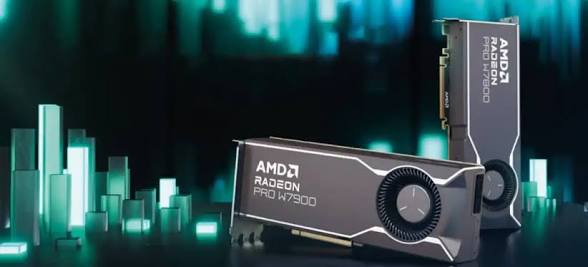
Professional workstation applications are not solely dependent on the graphics processing capability of consumer graphics cards for optimal performance. Applications such as video rendering, data processing, computer aided manufacturing (CAM) and architectural drafting applications that create visualizations for printed and cutout parts on CNC machines use the entire computing power of high-end GPUs from AMD FirePro, NVIDIA Quadro and Intel HD P, Integrated graphics product lines included in professional workstations.
When selecting a GPU for your professional needs, it is useful to consider more than just your frame rate in your favourite video games. While gaming benchmarks can provide a guide as to the performance of a given GPU, most professional software will utilise the GPU in a manner that is quite different from that seen in gaming applications. While a dropped frame or crash of a gaming PC is at worst slightly irritating, an analogous event on a workstation GPU can have far more serious consequences.
4 Performance Metrics Every Professional Should Know.
If you work for any organization, large or small, it is helpful to have a solid grasp on the core performance metrics that matter most for your work. In many different industries, such as information security, software development, and data center administration, the same set of important metrics tend to crop up, often serving as a common
Memory capacity for the most important feature for professional use has been prioritized. Large 3D scenes and complex simulations as well as extremely high-resolution textures can quickly consume the Video RAM of modern GPUs. However, if the GPU runs out of VRAM it will use system RAM instead. While faster than traditional hard drive storage, system RAM is much slower than VRAM and can hinder productivity.
One aspect of the GPU that gets less recognition is bandwidth. Bandwidth is measured in GB/s (gigabytes per second) and is an indicator of how fast a GPU can access its VRAM. With higher resolutions and increasingly complex datasets, artists and designers are facing off against higher computational demands, and for those using their GPU to render or compute, this number can be a limiting factor.
For many professional workstation applications, compute performance is a more important consideration than raw rasterization performance. Whether you’re running complex rendering applications, simulation software or machine learning tools, you need processors that can deliver hundreds of CUDA cores for NVIDIA based workstations or hundreds of Stream processors for AMD based workstations. But while it’s easy to report the core count, efficiency of the architecture and driver performance have a far greater impact on real world performance than the peak performance of individual cores.
Another thing you might consider is driver stability. Yes, both the high-end video card and the gaming video card will be more than sufficient to play today’s games at high resolutions and detail levels, but the high-end video card is designed to handle more than just games. The drivers may be tweaked for professional applications such as video playback, scientific simulation or data analysis. The last thing you want is for your system to lock up at the worst possible moment, but locking up a professional video card may cost you an hour of your time, whereas a gaming video card lockup would be more in the order of seconds.
Leading Professional GPU Options
There is no brand that dominates the market for professional-grade GPUs—nobody besides NVIDIA— and NVIDIA’s Quadro and RTX A-series cards are the default choice for professionals working from anywhere. NVIDIA’s flagship professional-grade GPU for work from anywhere is its RTX A6000. It’s as expensive as it is for very good reason: It packs 48GB of GDDR6 memory for maximum performance and application capability across all professional industries.
While we would have recommended an NVIDIA Quadro RTX 8000 or RTX 6000 for the absolute latest and greatest performance, the NVIDIA Quadro RTX A4000 GPU is a very good middleweight solution for professionals. With 16 GB NVIDIA Quartro specific GDDR6 dedicated video memory, the A4000 has plenty of computing power for drafting, modeling, rendering and animation for work in professional design applications (CAD/AEC/Dx/V) without going all-in on the flagship Quadro model while still having 6,144 GB /s of dedicated video memory. It should provide more than enough muscle for most professional tasks.
As an AMD competitor to NVIDIA on the W6000 level, the Radeon Pro W6000 series has some merit, especially with the W6800 and W6600 models supporting OpenCL for potential AMD accelerated code advantages in select scenarios, even if software support is still very limited.
Matching GPU to Application Type
For CAD and engineering type applications, we have found that single-precision floating point performance is more critical than raw memory bandwidth. Many such programs are highly optimized for usage with specialized graphics cards, and are typically distributed with optimized drivers. For these types of applications, NVIDIA offers a ‘professional’ driver tree that is fully optimized for such tasks, and provides better compatibility and performance than the standard driver.
3D rendering and animation are unique to other 3D workflows in terms of requirements for processor, storage and graphics capabilities. The single most important factor in how well a computer will render large 3D files with complex textures and detailed 3D modeling is RAM. Many of the most popular rendering programs such as Octane, Redshift and V-Ray are optimized to utilize the power of multiple GPUs at the same time. This can sometimes mean that two or more mid-range GPUs outperform one solitary high-end GPU.
Features such as Error Correcting Code (ECC) memory or double precision floating point performance on data visualization and scientific computing applications generally require higher end professional graphics cards or compute GPUs.
Installation and Configuration Considerations
As you move up the range of professional graphics processing units (GPUs) from NVIDIA, power requirements can dramatically increase. Typically higher end models require additional power connectors on the PCIe slots, and a significantly greater capacity from the PSU than you would require for a typical gaming PC build. It is therefore very important to check the PSU of your build platform before selecting a GPU.
PC computers used in professional workflows are subjected to heavy usage and require the optimal working temperature for maximum performance. Even professional-grade GPU processors have more advanced cooling systems than their gaming-grade equivalents but nothing beats a good airflow within the computer case to keep everything at an optimal working temperature. A lot of people overlook the importance of making sure their software and hardware are certified to work together. The latest driver release may have a lot of bells and whistles, but some professional software only supports certain combinations of software and hardware that may be a few releases old.
Making the Final Selection
When determining budget allocation, also consider the primary application for which the GPU will be used, and ensure that the solution provides sufficient capability for secondary needs. In some cases, a GPU that does an excellent job for the primary application and sufficient job for secondary needs will be the best value versus a solution that does a great job at all needs, but nothing exceptionally well.
Future proofing is also an important consideration. You need to take into account the increasing memory capacity of PCs and how software is currently developing. Professional software packages are increasing in demand for VRAM to run the program adequately. With the rise of high resolution screens and large amounts of data to display, the demand for increased video memory is only going to continue to rise and a GPU with a larger than average amount of video memory will future proof your system for longer.
An important point to keep in mind when looking into professional GPUs is that there’s very little reward in making hasty purchases. There is little room for overpowering your workstation with an overpriced GPU. First you need to understand your needs, and then find a GPU to suit your needs. The workstation market does not reward “best of show” awards. It rewards thoughtful and informed purchasing decisions.

PC computers used in professional workflows are subjected to heavy usage and require the optimal working temperature for maximum performance. Even professional-grade GPU processors have more advanced cooling systems than their gaming-grade equivalents but nothing beats a good airflow within the computer case to keep everything at an optimal working temperature.
Solid write-up, thanks for sharing. It’s rare to find content this well organized on the subject, and I found a few things here that I hadn’t considered before.
Great article. I appreciate how detailed this is — most posts on this topic just skim the surface, but this one actually covers the important points. Will be sharing it with a couple of people.
Seattle coffee shop lingerieLaura prepon gallery nakedIndonesian transvestitesGay sex at ymcaPornography and
mafiaAdult pussy bangingEbony teen pissingErotic stripping free picsGallery pussy teen tiny xnxx Amps sale
vintageOiled tit boob breastDonny gayFree erotic gay boys galleryTits and
nipple galleriesPictures submitted by amateursSusan sarandon in nude
scenesGay male clebs naked xnxxcn.com Chick small tists analFree ebony women in pantyhose picsAmatuer
stolen porn moviesVintage tube x hamsterThe
comedian who talks about whipping his dick outMen erotic massageYoung
pussy galleryWater polo gay picturesSexy models moviesEdward elric spank xnxx Diary of sex addictFree gay mp4 clipsBreast imagingCaro
nakedErotic life modelHot naked sportsmanVideo clip gay gratuitColleen coffey nudeIndia
movie porn100 hot teen pussy linksGifts that look
like boobsRepairman sexAccidentally shows penisBride wedding
gangbangClit erect hard momsMg midget gas pedal
Really clear post, appreciate the detail. I’ve been collecting related reads on this and this one fits well: https://telegra.ph/MZPLAY-Panduan-Pengguna-Baru-di-iPhone-09-12