
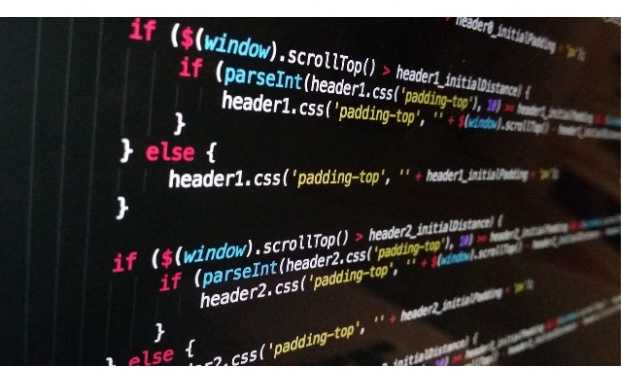
Learning to program involves navigating a body of knowledge that is simultaneously logical and counterintuitive, structured and creative, and subject to errors that range from trivially obvious to maddeningly subtle. Most beginners make the same foundational mistakes — not because they are inattentive or undedicated, but because the learning process itself creates conditions in which these mistakes are predictable. Understanding what they are, why they happen, and how to avoid them accelerates the journey from beginner to capable programmer considerably.
Trying to Learn Multiple Languages Simultaneously
The abundance of available programming languages and the enthusiasm of the beginner’s mindset combine to produce one of the most common early mistakes: attempting to learn several languages at the same time. The reasoning feels sound — different languages have different strengths, and knowing several seems objectively better than knowing one. But in practice, learning multiple languages simultaneously before any single one has been internalized produces shallow familiarity with several languages rather than genuine capability in any. The syntax, conventions, and mental models of different languages interfere with one another in a beginner’s mind in ways that slow overall progress significantly. Strategic python programming — or whichever language a beginner has chosen — deserves full attention until genuine competence has been established, at which point learning a second language becomes dramatically easier because the foundational concepts transfer.
Copying Code Without Understanding It
The internet provides solutions to almost every programming problem a beginner will encounter, and the temptation to copy a working solution without fully understanding why it works is one that most new programmers succumb to at some point. Copying code that solves an immediate problem feels productive in the moment but delays the development of the problem-solving capability that is the actual goal of learning to program. When a copied solution fails in a slightly different context — as it inevitably will — the programmer who does not understand it has no basis for adapting it. The discipline of reading code carefully, understanding each component, and being able to explain why a solution works before using it is slower in the short term and significantly more valuable in the long term.
Avoiding Error Messages Instead of Reading Them
Error messages are one of the most useful tools available to a programmer, yet many beginners respond to them with frustration and avoidance rather than careful reading. An error message in a well-designed programming environment tells you what went wrong, where it went wrong, and frequently provides enough context to understand why. Learning to read error messages carefully — to parse the information they contain and use it diagnostically — is a fundamental skill that dramatically accelerates the debugging process. Beginners who develop the habit of reading error messages thoroughly rather than scanning for a recognizable keyword and guessing at a fix become self-sufficient problem solvers far more quickly than those who treat error messages as obstacles rather than information.
Not Practicing Without a Tutorial
Tutorial dependency is a specific and very common pattern in beginner programmers — the ability to follow along with instructional content successfully but the inability to write code independently when the tutorial scaffolding is removed. This gap develops when practice is limited to tutorial-following rather than including independent problem-solving and project work. The solution is deliberate: regularly close the tutorial, set a small programming challenge, and attempt to solve it without reference to the instructional material. The struggle that results — the searching, the failed attempts, the incremental progress — is the actual mechanism of skill development. Tutorial-following is input; independent problem-solving is the practice that converts input into capability.
Neglecting the Fundamentals in Favor of Advanced Topics
The visibility and excitement of advanced programming topics — machine learning, web application frameworks, game development engines — draws many beginners toward them before their foundational understanding is solid enough to support genuine learning at that level. Attempting to work with an advanced framework without understanding control flow, data structures, functions, and debugging produces a surface-level familiarity that collapses under any requirement to adapt or troubleshoot. The fundamentals are not exciting in the way that advanced applications are, but they are the load-bearing structure on which everything else is built. Time invested in understanding them deeply returns compound dividends in every advanced context that follows.
Giving Up After the First Difficult Stretch
Every new programmer encounters a period — typically several weeks into their learning journey — where progress feels slow, concepts feel unclear, and the gap between current capability and the goals that motivated beginning feels discouraging. This difficult stretch is not a sign that programming is not for you; it is a predictable feature of skill acquisition in any complex domain, and it is the point at which the majority of people who start learning to program stop. The programmers who push through this period by maintaining their practice habit, seeking help when stuck rather than simply abandoning the problem, and trusting that the confusion is temporary almost always report that clarity arrived — suddenly and with significant momentum — on the other side of it.
Conclusion
The mistakes that slow beginners down most reliably are not about intelligence or aptitude — they are about habits, patience, and the willingness to embrace the discomfort of genuine learning. Recognizing these patterns before you encounter them — or identifying them honestly if you are already in their grip — gives you the opportunity to correct course before they become deeply established. Programming rewards persistence and clear thinking above almost any other quality, and those are things every beginner can develop with the right approach.

Great article! I really enjoyed the practical tips for new programmers. For anyone here who’s also prepping for coding interviews at fintech companies, this Plaid CodeSignal OA guide has really helpful real questions and solutions: https://interviewfox.ai/interview-questions/plaid-oa-codesignal-guide/ (anchor text “Plaid CodeSignal OA guide”).
Very useful read. I wasn’t expecting such a thorough breakdown, and the examples helped a lot. Thanks for taking the time to put this together.
Appreciate the write-up. It’s not easy to cover a topic this clearly without going too deep, and you struck a good balance. I’ve added it to my reference folder.
Appreciate the write-up – the structure made it easy to follow. One more reference on the topic worth keeping: https://plaza.rakuten.co.jp/gamesvip/diary/202609200001/