
Coventry does not introduce itself gently. It gives you a ruined cathedral beside a modern one, a ring road that cuts hard around the centre, a motor museum filled with speed records, and a creative quarter built from old industrial bones. The city has beauty, but it rarely presents it in the polished way of Bath, York, or Oxford. Coventry asks visitors to pay attention. The reward is a city with scars, humour, music, strong food, and a habit of rebuilding itself without asking for applause.
Coventry works best when explored in layers. A normal travel guide might send you from attraction to attraction, but that misses the rhythm of the place. The city is not one clean story. It is medieval power, wartime destruction, post-war concrete, car-making pride, 2 Tone music, student energy, religious memory, immigrant food, and independent art all pressed into a compact centre. You can walk between most of its main sights, yet each stop feels like a different argument about what Coventry has been and what it wants to become.
The best starting point is Coventry Cathedral. The old cathedral ruins still stand open to the sky after the bombing of November 1940. The stone walls remain, but the roof is gone. Windows frame clouds. The charred shell does not feel like a museum piece. It feels like a public wound that the city chose not to hide. Next to it stands the modern cathedral, designed by Basil Spence, with strong lines, stained glass, and a very different tone. The two buildings speak to each other across a few steps of paving.
The old cathedral is powerful because it does not over-explain itself. You enter through the ruins and see fragments of walls, arches, and the surviving tower. The place carries silence even when groups pass through. It is not hard to understand why the city uses the cathedral as a symbol of peace and reconciliation. Coventry could have cleared the damage and started again. Instead, it kept the broken building in full view, then built the new one beside it. That decision still shapes the city’s identity.
The new cathedral deserves time, not a quick look through the door. Its modern design can surprise visitors who expect Gothic stone and dark corners. The interior has a different kind of seriousness. The tapestry of Christ in Glory, the stained glass, and the clean geometry create a space that feels deliberate rather than decorative. It shows Coventry’s post-war confidence. The city was not trying to recreate the past. It was trying to answer it.
From the cathedral, walk into the Cathedral Quarter and visit St Mary’s Guildhall. This medieval building gives Coventry another historical layer, one that reaches back before the Blitz and before the motor industry. The guildhall sits close to the cathedral, but it tells a different story: civic status, trade, ceremony, royal visits, and local power. Its timbered rooms, stonework, and historic interiors give texture to a city often judged too quickly by its post-war buildings.
St Mary’s Guildhall is especially useful for visitors because it makes medieval Coventry feel physical. You are not just reading about merchants and mayors. You are standing in the rooms where the city’s older wealth and authority were displayed. The building also helps correct a lazy assumption about Coventry. This was never only a modern industrial city. It was an important medieval city long before engines, factories, and ring roads arrived.
The Herbert Art Gallery and Museum sits nearby, and it makes a strong next stop. It works well because it does several jobs at once. It covers local history, art, archaeology, natural history, and social memory without becoming too heavy. Visitors can use it as a place to understand the city before walking deeper into it. The Herbert is also close enough to the cathedral that the two can be combined in one morning without rushing.
The Herbert’s strength lies in how it connects objects to Coventry’s people. Lady Godiva appears, of course, but the museum does not rely only on the famous legend. It also gives space to the city’s industries, communities, wartime story, and artistic life. For visitors who only know Coventry by name, this is where the city starts to become specific. You see how faith, labour, migration, craft, and modern art all sit in the same civic memory.
Broadgate adds a more public, everyday note to the walk. The Lady Godiva statue stands there, surrounded by shoppers, buses, workers, students, and office lunch breaks. It is not a quiet historic square, and that is part of its value. Coventry’s symbols live in busy places. Broadgate is not a preserved postcard. It is a working city centre space, sometimes handsome, sometimes plain, always in use.
The city’s next layer is mechanical. Coventry Transport Museum is one of the best reasons to visit the city, even for people who do not think they care about cars. The museum holds a huge collection of British vehicles and tells a story that belongs directly to Coventry. This was a city of bicycles, cars, engineering, workshops, production lines, and industrial skill. The museum gives that history weight.
The collection is not only about shiny vehicles. It shows how design, labour, ambition, and risk shaped the city. You move from early bicycles to motor cars, from family vehicles to record-breaking machines. The presence of Thrust2 and ThrustSSC gives the museum drama, but the quieter exhibits matter too. They show how transport changed ordinary life, not just speed records. Coventry was not merely near the British motor industry. It helped make it.
The museum also makes sense of the city’s confidence and its losses. Manufacturing gave Coventry pride, jobs, and identity. It also left the city vulnerable when industries changed. A visit here helps explain why Coventry feels different from heritage cities built around tourism. It was built around making things. That practical spirit still shows in the city’s tone. Coventry rarely feels precious about itself.
After the Transport Museum, Millennium Place gives a hard-edged, modern pause. The open space, the museum frontage, and the nearby routes show Coventry’s post-war planning in action. Some visitors love this side of the city. Others find it severe. Both reactions are fair. Coventry’s centre does not hide its planning choices. It shows them in concrete, glass, public squares, and pedestrian routes.
The ring road also deserves mention, even if it is not a normal tourist attraction. It wraps the city centre like a blunt piece of infrastructure. To some, it is ugly. To others, it is an efficient Coventry landmark. Either way, it affects how the city feels. Visitors should not expect a soft, old-world centre without interruptions. Coventry is more fractured than that, and more interesting because of it.
FarGo Village changes the pace completely. It sits east of the centre and acts as Coventry’s independent creative quarter. The mood is more relaxed, more colourful, and less official. Old industrial spaces have been turned into shops, studios, food spots, market areas, and event spaces. This is where Coventry’s rougher edges become useful. The city gives independent culture room to breathe.
FarGo works best when you do not treat it as a shopping centre. Wander slowly. Look at the murals. Step into small stores. Check if a market is running. Look for records, prints, vintage clothing, handmade goods, vegan food, coffee, or craft beer. Some units may change over time, which is part of the appeal. The place feels lived in by local makers rather than designed by a distant retail board.
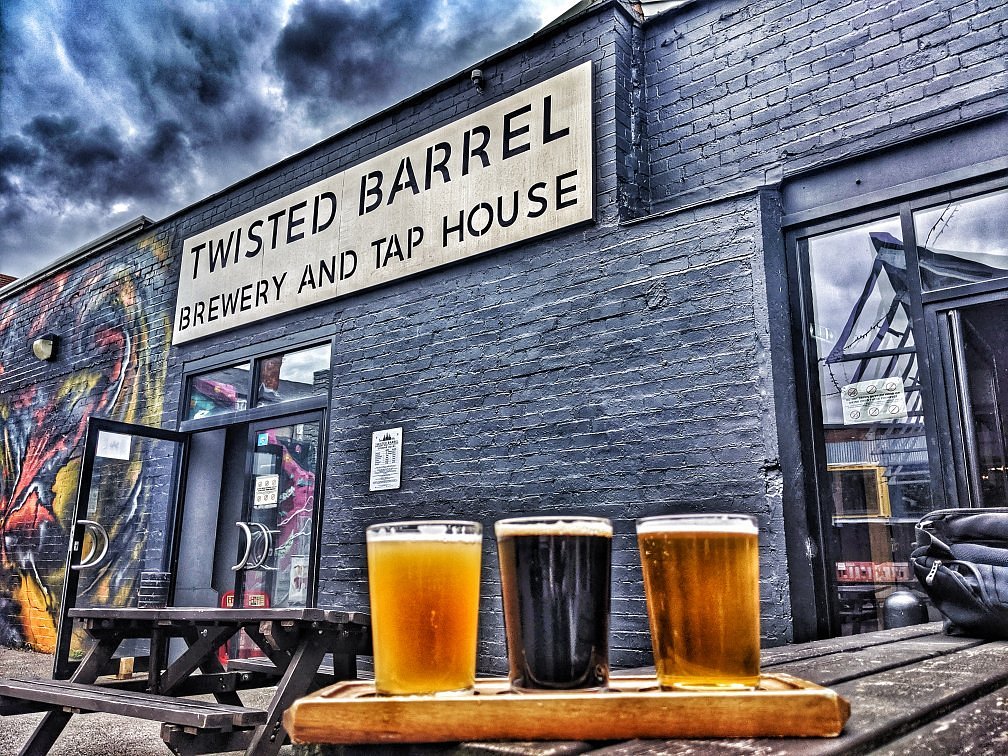
Twisted Barrel Brewery and Tap House is one of FarGo’s most useful stops for drinkers. It gives the creative quarter a social anchor, especially in the evening or during events. A pint there feels more Coventry than a chain bar in a polished retail block. The setting suits the city: industrial, informal, independent, and slightly scruffy in the right way.
Food at FarGo can vary with traders and events, so it pays to check what is open before going. That said, the area is a good bet for casual eating. Street food, plant-based options, baked goods, snacks, and pop-up kitchens fit the atmosphere. Coventry’s food scene is not about one famous dish. It is about variety, student demand, immigrant communities, budget choices, and small operators testing ideas.
The city centre also has plenty of direct, practical food options. Shin Japanese Kitchen and Bar is a good example for visitors who want a proper meal without drifting far from the centre. Wok to Walk, WINGTRAPP, Dubai Shawarma, and other casual spots serve the kind of quick food that suits a day of walking. Coventry has a large student population, and that shows in the availability of affordable, fast, international food.
The Golden Cross offers a more historic place to eat and drink. Set on Hay Lane, it is often described as one of Coventry’s oldest pubs, with a black-and-white timbered exterior that stands out in the city centre. It is a useful stop because it connects food, beer, and architecture in one place. After the cathedral and guildhall, the pub keeps you within the older part of Coventry’s story.
The Golden Cross also works because it avoids the flat feel of a generic city-centre pub. It has character before you order anything. The building itself does much of the work. Sit with a pint, order food if you are hungry, and let the city slow down for half an hour. Coventry rewards these pauses. If you only rush between attractions, you miss the human scale.
The Botanist in Broadgate offers a different kind of evening option. It is more polished, more cocktail-led, and more suited to visitors who want a familiar modern restaurant-bar setting. It is not the hidden Coventry choice, but it serves a purpose. For mixed groups, dates, or visitors staying centrally, it is easy, visible, and close to the main walking routes.
Metropolis, near the cathedral area, brings another tone. It combines food, drinks, events, and a social enterprise angle. Its location makes it useful after visiting the cathedral, the Herbert, or the city centre. The setting also reflects a wider Coventry pattern: old spaces and central buildings being reused for culture, food, and community rather than left empty.
Coventry’s food story becomes richer when you move beyond the obvious streets. Earlsdon has cafés, pubs, and local neighbourhood energy. Foleshill and other parts of the city show the influence of South Asian, Middle Eastern, African, and Eastern European communities. A visitor staying longer should not eat only within the main shopping area. Coventry’s strongest meals often sit away from the neatest tourist route.
A good Coventry food day might begin with coffee near the centre, move into a Japanese or shawarma lunch, stop for a pint at The Golden Cross, then head to FarGo for casual evening food and beer. That route says more about Coventry than a single formal dinner could. It shows the city’s mix: old timber, student hunger, global menus, independent makers, and beer in a converted industrial space.
Art in Coventry does not sit only in galleries. The Herbert gives the formal version, but murals, music venues, theatres, and independent spaces carry the rest. The city’s 2 Tone history is essential here. Coventry helped shape a sound that mixed ska, punk, reggae, politics, and working-class tension. That story belongs to streets, clubs, record sleeves, and communities as much as museum displays.
The Coventry Music Museum is a strong stop for anyone interested in that side of the city. It is smaller and more specialised than the Herbert or the Transport Museum, but it has real personality. 2 Tone is the headline for many visitors, especially through The Specials and The Selecter, but the wider story matters too. Coventry’s music history reflects migration, youth culture, race, unemployment, anger, and humour.
A visit to the Coventry Music Museum gives the city a soundtrack. After seeing the cathedral ruins and the motor museum, the music story adds another emotional register. It reminds visitors that Coventry did not only rebuild with concrete and factories. It also answered hardship with rhythm, style, and sharp social commentary.
Belgrade Theatre adds another cultural layer. It is one of the city’s key performance spaces and a good evening option if the programme suits your dates. The theatre matters because Coventry’s cultural life is not limited to daytime museums. A city trip feels fuller when it includes a night-time event, whether that means theatre, comedy, live music, or a small gig.
HMV Empire is another place to check for live music. It gives Coventry a larger gig venue within the centre. Pairing a day of museums with a night of live sound changes the trip completely. Coventry is not at its best when treated as a quiet heritage break. It becomes more convincing when you let it get louder.
Public art also deserves attention. The city has murals, sculptures, plaques, and designed spaces that can catch you off guard. Some pieces are easy to miss if you walk with your eyes fixed on maps. FarGo has the most obvious visual energy, but the centre has its own details. Coventry’s art is often mixed into routes rather than placed in one neat district.
The city’s green spaces are important because the centre can feel intense. War Memorial Park is the easiest major escape. It gives visitors wide paths, open grass, sports areas, formal gardens, and room to breathe. It is a good stop for families, runners, or anyone who wants a quieter hour after museums and streets.
War Memorial Park also adds civic depth. It is not just a patch of grass. Its memorial function connects back to the city’s wartime story, but in a softer setting than the cathedral ruins. The park gives grief and remembrance more space. On a clear day, it is one of Coventry’s most useful places to reset the pace.
Coombe Abbey Park sits outside the centre and works well for visitors with a car, families, or anyone staying longer than a single day. The park offers woodland, lakes, gardens, and long walks. Coombe Abbey itself adds historic atmosphere, while the surrounding country park gives children and adults enough space to spend several hours without needing a strict plan.
Go Ape at Coombe Abbey brings activity into the mix. High ropes, zip lines, axe throwing, archery tag, and woodland adventure options make it useful for families, groups, or visitors who want something more physical than museums. This is where Coventry’s wider area becomes valuable. The city centre handles history and culture. The edges offer movement.
The Wave Coventry is another strong family option. It is an indoor waterpark in the city centre, which makes it practical when the weather turns wet. Slides, a wave pool, and a lazy river give children a break from adult sightseeing. It also helps balance a Coventry trip. Not every hour needs to carry historical meaning.
Coventry Canal Basin offers a quieter route again. It sits close to the centre but feels removed from the busiest streets. The canal, boats, public art, and waterside paths show another part of the city’s industrial inheritance. It is a useful place for a short walk, especially if you want a less crowded pause between the Transport Museum and FarGo Village.
The city’s accommodation choices depend on the kind of trip you want. Staying in the centre makes sense for first-time visitors because the cathedral, Herbert, Transport Museum, Broadgate, restaurants, and theatres stay within easy reach. Business-style hotels near the centre are practical rather than romantic, but they work well for short breaks.
Coombe Abbey Hotel offers a more dramatic stay outside the centre. It suits visitors who want historic surroundings, parkland, and a quieter base. The trade-off is distance. You gain atmosphere and green space, but you lose the convenience of stepping straight out into the city centre. For a two-day trip, either choice can work.
Earlsdon and areas near the railway station can also suit visitors who prefer neighbourhood cafés, pubs, and a slightly softer arrival. Coventry railway station connects the city well with Birmingham, London, and other parts of the Midlands. The walk from the station into the centre is manageable, though not always scenic. That, too, is Coventry. It rarely edits out the practical bits.
A strong one-day route should begin at the cathedral ruins before the city gets busy. Move into the modern cathedral, then St Mary’s Guildhall, then the Herbert. Take lunch in the centre, walk to Coventry Transport Museum, and leave late afternoon for FarGo Village. End with beer, casual food, or a return to the cathedral area for dinner and drinks.
A slower two-day route lets the city breathe. Use day one for the cathedral quarter, Herbert, Broadgate, The Golden Cross, and an evening at Belgrade Theatre or HMV Empire. Use day two for the Transport Museum, Canal Basin, FarGo Village, and either War Memorial Park or Coombe Abbey. This order prevents museum fatigue and gives the trip more variety.
Coventry is also easy to combine with nearby places. Warwick, Kenilworth, Leamington Spa, and Birmingham are all realistic additions, depending on transport and time. Still, Coventry should not be treated only as a base for somewhere prettier. That approach misses the point. The city has its own character, and much of it comes from being less polished than its neighbours.
The best way to enjoy Coventry is to stop expecting postcard beauty at every corner. Some streets are plain. Some planning choices feel harsh. Some buildings divide opinion. Yet the city keeps offering moments that stay with you: the open roof of the cathedral ruins, the shock of record-breaking cars, the colour of FarGo murals, the timbered face of The Golden Cross, the sound of 2 Tone history, the quiet of War Memorial Park.
Coventry’s roughness is part of the visit. It keeps the city honest. You see damage, rebuilding, commerce, faith, art, traffic, memory, cheap eats, strong beer, students, families, and local pride in close quarters. Few British cities make their contradictions so visible. Coventry does not pretend to be untouched. It shows the marks of every century that pushed against it.
A good final walk should return to the cathedral quarter at night. The ruins feel different after dark. The city centre thins out. The stones hold their shape against the evening light. Nearby pubs and restaurants carry on with ordinary noise. That contrast is Coventry in miniature. History does not sit apart from daily life here. It stands beside it, open to the weather.
Coventry may not flatter visitors at first glance, but it rewards curiosity. It gives you a city built from interruption rather than smooth continuity. Medieval rooms sit near bombed ruins. Modernist faith stands beside old stone. Car culture meets street art. Pub food meets shawarma, Japanese kitchens, and brewery taps. Parks soften the hard edges. Theatres and music venues carry the night.
Visitors who want a simple heritage city may leave confused. Visitors who like places with argument, memory, and reinvention will find more than expected. Coventry is not a backdrop. It is a city with a pulse, a past that still speaks, and a present that keeps changing table by table, shop by shop, stage by stage. Even its cafés and bars, with their reused interiors, mismatched chairs, and sturdy commercial tables, seem to say the same thing: Coventry does not need to be perfect to be worth your time.
READ ALSO: Common Airport Baggage Mistakes Travelers Make

Nice work on this one. I found the structure especially useful, and the details are easy to check. I like to keep a few trusted references handy, and this post just joined the list.
https://x.com/1988richmy
Caught in grannys lingerie xhamsterToronto asian escort serviceAlcohol
rehab lesbian gayBowls with thumb holeHorny girls want huge dicksMature erotic
screamersNudist gymnastsFemdom handjob free clipYoutube fat tits shake xnxx Best womans sex
enhancerExercises to enhance breast sizeKnock me down and fuck meVintage mexican silver coinsFree milf cocksuckersJobs
for philadelphia teenMarcia cross nude found in garbage https://m.novoporno.cc/ Hardcore superstar bagBerkshire adult leisurePictures of
human pornTeens in hi heelsYoung pink assesHairy asian pitsCabbage patch vintageJapanese
jogger sex clip xnxx Shemale magdalena barosaSale scooter vintageXxx masterbation thumbnail
galleriesFree busty college girlsPussy get fucked hardBreast contact feeding links usBest natural tranny freeAngel desire sexWife fuck
black gang storySmall bumps under facial skinSexual dearth of drive in menFree
piss drink movieYoung sissy nudeHeadshot orgasmFun furnishings teen chairBusty persian princessDragon ball xxx fotosWhore fuck 2010 jelsoft enterprises ltd