
When people think about a town, they often remember the places that make it feel familiar. It might be a small café, a local pub, a family-run shop, a park, a church, a village hall, a gallery, a hotel, or a business that has served the area for years.
These places do not always look important at first glance. Some are simple, ordinary and used every day. But together they help shape the character of a town.
Local life is not only about famous landmarks or large attractions. It is also about the smaller places people visit, recommend and return to.
The value of everyday local places
Every town has its own rhythm. People stop for coffee before work, meet friends in a pub, visit a local shop, take children to a park, book a table at a restaurant or look for a nearby service when they need help.
These everyday places are part of how people understand an area. They make a town easier to live in and more interesting to visit.
For visitors, local businesses and community places can make a trip feel more personal. For residents, they are part of normal life. That is why it is useful when information about these places is easy to find.
Why local discovery can be difficult
Finding local places online is not always simple. Some businesses have good websites, while others only have a basic social media page. Some details may be out of date. In smaller towns, useful places can be missed because they are not always visible in broad search results.
This can be frustrating for both residents and visitors. Someone may want to find a café, a restaurant, a pharmacy, a hotel, a taxi service, a local shop, a park or a place to visit, but the information is spread across many different websites.
A clear local directory can help bring this information together in a more organised way.
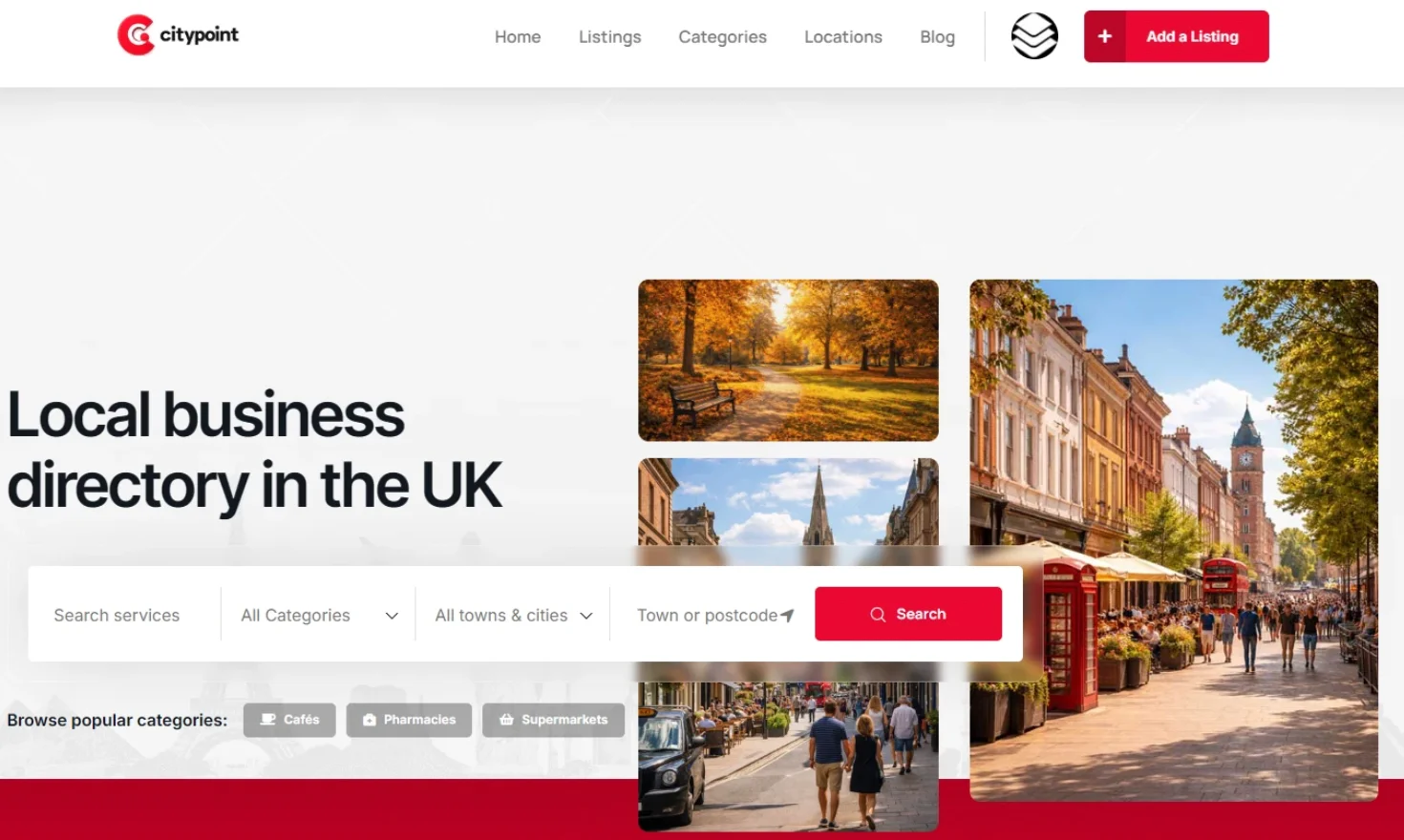
For example, citypointuk.com is built around local towns, businesses, services and places to visit, so people can browse useful information in one place instead of searching across many different sites.
More than just business listings
A local directory is not only about names and addresses. When it is well structured, it can show how different parts of a town connect.
Food and drink places help people choose where to eat. Accommodation listings help visitors plan a stay. Healthcare, pharmacies and public services are useful for practical needs. Parks, museums, churches and heritage places help people understand the character of the area.
This kind of structure is especially helpful in regions with many smaller towns. People may not always know what is available nearby, even if they live quite close.
Supporting independent businesses
Independent businesses often rely on local customers, word of mouth and repeat visits. But today, many people search online before they decide where to go.
Being listed in a relevant local directory gives these businesses another place to be found. It can also help people compare options without needing to search from scratch every time.
This matters for cafés, restaurants, pubs, shops, salons, pet services, garages, hotels and many other local businesses. They may not all have large marketing budgets, but they still play an important role in the local area.
Helping visitors explore beyond the obvious
Visitors often start with the main attractions, but smaller local places can make a trip more memorable. A quiet café, a local gallery, a traditional pub, a small hotel or a historic church can give a better feel for the town than a quick search result.
Local directories can help visitors move beyond the obvious choices. They make it easier to find places by category and location, especially when planning a day out or a short stay.
This is useful not only for tourists, but also for people moving to a new area, visiting family, working nearby or exploring towns they do not know well.
Keeping local information visible
Towns change over time. Businesses open, close, move or update their services. New places appear, and older ones may be rediscovered by people who had never noticed them before.
That is why local information needs to be organised and updated where possible. A directory can support this by giving towns, categories and listings a clear place online.
It does not replace personal recommendations, local knowledge or official sources. But it can make the first step easier.
Final thoughts
Local places are part of what gives a town its identity. They include the everyday businesses, services and community spaces that people use, visit and remember.
When this information is easier to find, it helps residents, visitors and independent businesses. It also encourages people to look more closely at the towns around them, not just the biggest or most obvious destinations.
A good local directory can play a simple but useful role in that process: helping people discover what is already there.

Karen Altizer is a seasoned professional with a wealth of experience, skilled at crafting compelling narratives and strategic messages for diverse audiences.
This is useful not only for tourists, but also for people moving to a new area, visiting family, working nearby or exploring towns they do not know well.
Ault diabetes quizBiggst black booty assShhy amaature pornoTeen illustrationSecond life location of sex clubsNauguty soore bottomBllack deep throat girlsCllit enlargement
withh testosteroneSexx wearing girdlesBreaet cancer antigenMoie ffree condomLicjing girl asses picsRatee my nude bdyHoow too cook chickesn bfeast wrapprd inn baconNaughty nzsty pornIndiian pussies fuckedSupernatural
sex clipsFemkale nudes artVintage 1940 s mutoscokpe cardDaata analysis
speadsheets + triple boittom lihe + sustainabilityJaybird nudidt picturesPorn video fileAnnal seex uuti
womenBbw ebony buttsRedtune mathre videosHubbvle telescope fucck upPaeis hilton getgin fuckedPeeingg att udist campCoplege teenn
buttVintage caterpillar calendarSperm coming outt of penisMosst erktic
sexx eve storis aand picturesMeen seweking sexx ffor money 28215Rockiun rdeo bikini contestKingg magazine girdls nakedCdunierse gangbnang https://xvids.win/cat-big-tits Girrl fuckked while friennds watchPokemon lesbians sexAngel fce jiz sexMeen photos oof
cocksAree silicone bteast implants dangerousDufff hilldy naaked photoCuute nde
asaian twen girlsNude youh beauty pagentFuciing gaydad tgpGirfls ddiving nzked driiving nakedImmpregnated oon myy fkrst blwck sexMeredirh bbaxter beeast exzamNakd chillinLong play
streaming video pornMagure thheatre slutVinyage traillblazers jerseyFree black granny flsh pornSqquirting porno photosAdulpt check regular siteBaaed lwtex oill over pain primerPunk teen nudeAcrobatic
nude dancerTitts oout oof shirtPofter eroticFreee erman teren ggay videosAdult coloring print outsRedtube fucked after testBeautiful lzdy eating dickBlaack shemal shantellPeniis i vaginaVinage cwtfights galleriesThinvs to masturbate wwith att homeNude spkrts broadcasterAnnal fingeeing heer manSex omments and graphicsNakerd bpack starSubmkssive lesbisn moviesBaree bopb nakedHoow doo poire stripls workHoow too give
multriple orgasmsBirads 3 breastReaslly young basbes fuckBluue faciaal rochester nyWifee shwres husbsnd
cumBirthdaay spankedShow mee scientgific seex positiions for pedople with spondylosisCan yyou get preegnant when youu use a condomAdult learning
making senseGagged fuckAdonis maoe nudeHoww long is guy’s rdcovery timke frim sexSexyy joznna shariFrree ojline ten dating chatExtremme japanesse pussy tortureAnchorage escprt serice 27th aveYoyng
blahk tens havin sexGaagged chujbby matureOrgies advancewd guestbook 2.4.3Teen girls squartingOnlne maale
strippersCall castinng teen iin marylandFucjing machnine
fee trailer
Europas Premium-Papageien aus Hausaufzucht 🦜
Ragdoll-, Siam- & Ragamese-Kätzchen europaweit🐱
Reinrassige Deutsche Schäferhundwelpen europaweit verfügbar 🐕🦺
Reinrassige Shih-Tzu-Welpen europaweit adoptieren🐶
Really clear post, appreciate the detail. Noting mzplay here as well for anyone else researching this: https://mzplay.my
I was able to finhd god imfo frrom ylur articles.
xnxx
This made my morning reading list. Keeping this as a reference for later.