
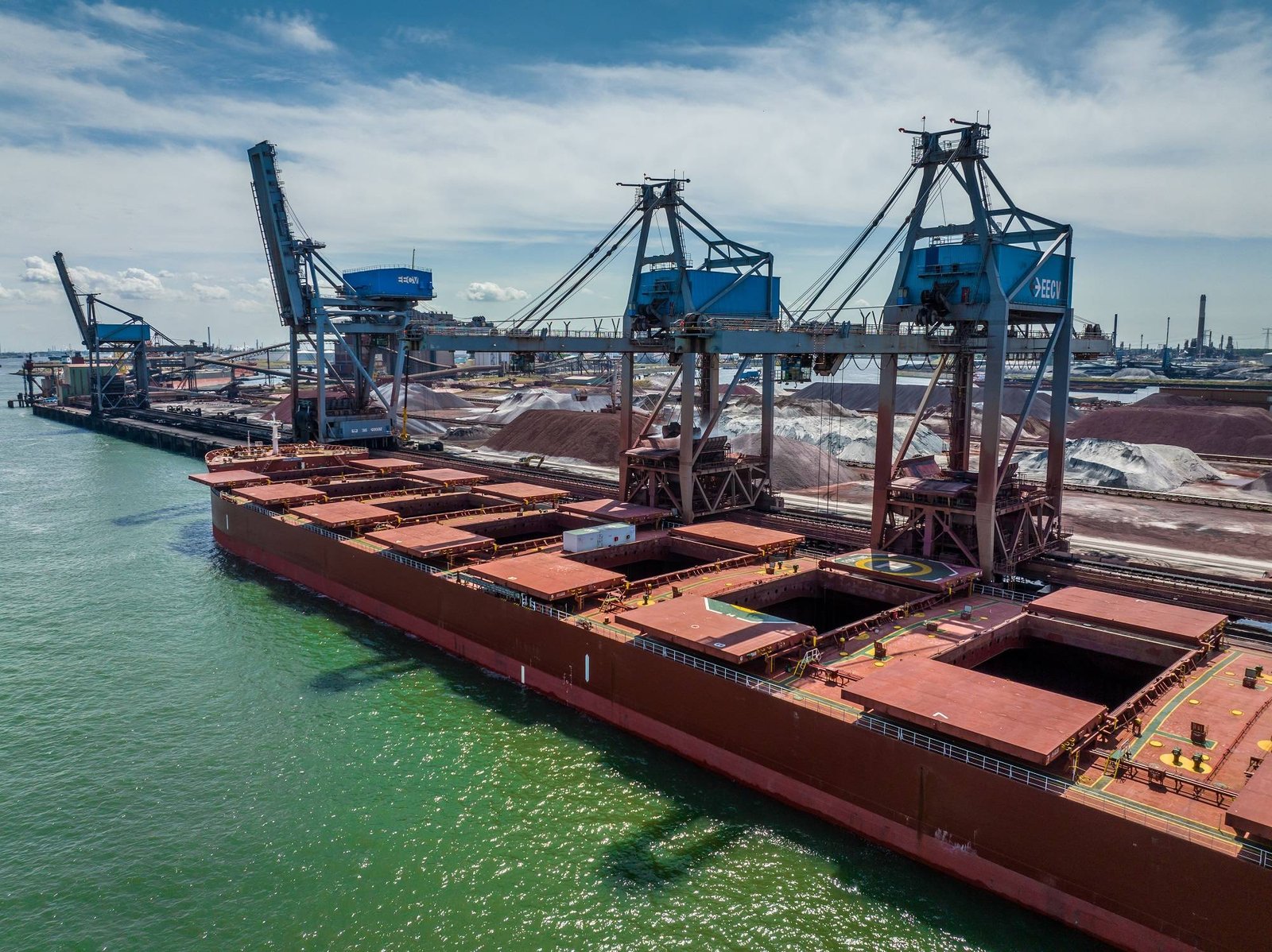
Moving bulk cargo between Turkey and Italy requires more planning than booking a truck or reserving space on a vessel. Shippers must match the transport mode to the commodity, loading equipment, quantity, delivery deadline and customs requirements. A capable freight forwarder coordinates carriers, handling, documentation and border processes, helping the shipper understand the full logistics cost before the cargo leaves the origin facility.
What a freight forwarder does
A freight forwarder arranges the movement of goods on behalf of an exporter, importer or trading company. Depending on the agreement, the forwarder may book road, sea, rail or multimodal transport, coordinate consolidation and handling, prepare or check shipping documents, arrange customs representation and track the consignment. Some firms also operate warehouses, vehicles, container equipment or other transport assets, while others use approved partner networks.
For bulk cargo, the first task is to understand what “bulk” means in the shipment. It may refer to loose dry materials such as minerals, grain, fertiliser or aggregate; liquid bulk such as oils or chemicals; or large volumes of packaged goods transported in containers, big bags, pallets or breakbulk units. These types require different equipment, loading methods, safety controls and documents. A forwarder cannot quote accurately until it knows the cargo and how it is presented.
Choose between road, sea and multimodal transport
The best route depends on the exact Turkish origin, Italian destination, cargo volume, delivery deadline, port access, weight restrictions and available equipment. Road freight can provide door-to-door service for packaged goods and some bulk commodities. Sea freight can be effective for large quantities or heavy cargo when the shipper can load and discharge at suitable ports. Rail or combined transport may be an option for certain lanes, but terminal access and transfer handling must be confirmed.
Road freight
Road transport can be flexible when cargo needs to move directly from a factory or warehouse to a consignee. Full truckload is useful when one shipment occupies most or all of a vehicle; less-than-truckload combines smaller consignments with other freight. Equipment may include a tipper, tanker, silo trailer, flatbed, curtainsider or specialist unit. The cargo’s density, dimensions, loading method and unloading facility determine which vehicle is appropriate.
Route planning must account for the land route, ferry connections where used, driver and vehicle documents, border formalities, road tolls, weight limits and any permits for oversized or hazardous cargo. A low line-haul rate may omit ferry charges, waiting time, customs handling or unloading costs. Ask the forwarder for a clear route plan and a breakdown of which party pays each charge.
Sea freight
Sea freight may suit large quantities, heavy cargo or shipments that can tolerate a longer transit time. Packaged cargo may move in standard containers, open-top equipment, flat racks or breakbulk vessels. Loose bulk commodities generally require appropriate ship and terminal infrastructure. Tank containers or specialised tankers may be needed for liquid cargo. Ask whether the rate covers origin handling, port charges, freight, destination handling and inland delivery.
Confirm the loading port, discharge port, sailing frequency, cut-off times, transhipment, storage, demurrage, detention and last-mile haulage. A port-to-port quotation may not include collection from the Turkish factory or delivery to the final Italian warehouse. It may also exclude customs clearance, inspections, storage and unloading. Request a door-to-door quotation or a fully itemised schedule so you can compare providers fairly.
Describe the cargo accurately
Give the forwarder the commodity name, material description, tariff classification if known, quantity, gross and net weight, dimensions, packaging and origin and destination addresses. State whether the product is hazardous, temperature-sensitive, food-grade, perishable, controlled or subject to technical regulation. If it is a powder or liquid, explain how it is contained and whether special cleaning, lining, ventilation or contamination controls are required. Inaccurate descriptions can lead to a rejected booking, customs delay, inspection, penalty or safety incident.
For loose dry bulk, provide density or stowage factor, moisture sensitivity, flow characteristics, dust risk, loading rate and discharge method if known. For containerised cargo, provide pallet count, dimensions, stackability, gross weight per package and a loading plan. Confirm who supplies equipment, who checks its condition and who is responsible for empty returns. A shipment that needs a food-grade container should not be treated as ordinary general cargo.
EU–Turkey customs union and A.TR documents
The EU–Turkey customs union has operated since 1996, but it does not cover every product category. The European Commission explains that it covers industrial products and processed agricultural products, while agricultural products and coal and steel products follow separate arrangements. Goods covered by the customs union that are in free circulation may use an A.TR movement certificate to evidence customs status. An A.TR is not the same as a certificate proving the product’s country of origin.
Do not assume every shipment from Turkey to Italy qualifies automatically for duty-free treatment or that an A.TR is always the only document required. The correct treatment depends on the product category, customs status, classification and any applicable trade measures. Check the commodity code and the specific requirements using the European Commission’s EU–Türkiye Customs Union guidance and Access2Markets. Agricultural goods, certain steel products and regulated commodities may need a different analysis.
For an explanation of the road consignment note, the UK government’s guidance on carrying out international road haulage describes the CMR document and its role in an international commercial road movement. The exact customs declarations and supporting records for Turkey–Italy trade should still be confirmed with the customs broker for the commodity and route.
Common shipping and customs documents
The document pack varies by commodity, mode of transport, customs procedure and contract. It may include a commercial invoice, packing list, customs declaration, transport document, proof of customs status or origin where relevant, insurance certificate and licences or product-specific certificates. Road freight normally uses a CMR consignment note for the international road leg. Sea freight may use a bill of lading or sea waybill. Each document has a different purpose and should be checked by the parties before dispatch.
Regulated products may require additional evidence. Food and plant goods can be subject to sanitary or phytosanitary controls. Chemicals and dangerous goods may require classification, safety data, appropriate packaging, labels and dangerous-goods transport documentation. Machinery and electrical equipment may need evidence of conformity with relevant EU requirements. Ask the customs broker to verify the requirements against the actual product and tariff code rather than a broad description such as “building material”.
Use Incoterms to allocate responsibility
Incoterms clarify certain responsibilities and costs between seller and buyer, including who arranges transport, where delivery takes place, who handles export or import formalities and when risk transfers. They do not replace the sales contract, determine ownership of goods or resolve every question about payment and product quality. The parties should state the chosen term with a precise named place or port and the applicable edition.
Terms such as FCA, CPT, CIP, DAP and DDP allocate different obligations. The best choice depends on which party can arrange transport, customs clearance and insurance. Do not use an old Incoterm simply because it appears on a previous invoice. Ask the freight forwarder and trade adviser to explain how the selected term affects the actual Turkey–Italy journey and the consignee’s responsibilities.
Calculate the total landed logistics cost
Request a breakdown of collection, export handling, origin customs, terminal charges, sea or road freight, ferry cost, transit handling, insurance, destination terminal charges, import customs, duties and taxes, and final delivery. Other charges may include weighing, inspection, storage, demurrage, detention, waiting time, pallet exchange, specialist equipment, cleaning or fumigation. For bulk cargo, loading and unloading speed can affect how long a truck or vessel is held at the facility.
Ask whether the quotation is fixed or subject to fuel, toll, currency, port or seasonal surcharges. Confirm validity dates and assumptions about volume, weight, free time, loading hours, customs status and delivery slot. A low quote based on an inaccurate weight or incomplete route is not a meaningful comparison. Give at least two or three forwarders the same written specification and compare like for like.
Insurance and cargo risks
Carrier liability is not the same as full cargo insurance. Liability limits may depend on the transport mode, convention, contract and circumstances of loss, and may not cover the full commercial value. Ask whether the forwarder is arranging cargo insurance or merely offering a price for it. Check insured value, route, loading and unloading cover, deductible, exclusions, moisture or contamination clauses and the claims process.
Bulk cargo can be affected by contamination, moisture, spillage, shortage, heating, shifting, corrosion or damage during transfer. Equipment selection and packaging are part of risk management. If the cargo needs a clean, dry or food-grade container, state this clearly and ask how the equipment is inspected before loading. Keep photographs, seals, weight tickets and loading records where appropriate.
How to select a Turkey–Italy freight forwarder
Look for experience with the specific commodity and lane rather than a general claim of international coverage. Ask whether the company has an office or local partner in Turkey and Italy, who handles customs declarations, what tracking is provided and how exceptions are escalated. Confirm that it can arrange the required trailer, vessel, container or bulk-handling equipment. References from customers moving comparable goods can be more useful than generic testimonials.
Ask for the company’s legal name, registration details, insurance information, liability terms and standard trading conditions. Clarify whether the company is acting as agent, carrier, customs representative or subcontracting coordinator. Confirm who is responsible if a border inspection, missed sailing, damaged seal or equipment failure delays the cargo. A good forwarder explains assumptions and risks instead of promising an unrealistically exact delivery time.
Questions to ask before booking
- Which mode and route do you recommend for this cargo, and why?
- Does the quote include collection, customs, handling and final delivery?
- Which tariff code and product-specific documents apply?
- Is an A.TR appropriate for this cargo and its customs status?
- Who supplies loading and unloading equipment?
- What cargo insurance is included and what is excluded?
- Which waiting, storage, demurrage and detention charges may apply?
- Who will provide tracking and deal with a delay or inspection?
Frequently asked questions
Does an A.TR certificate prove goods originated in Turkey?
No. It is used for customs-status purposes for goods covered by the EU–Turkey customs union. Origin and customs status are different concepts.
Is road freight faster than sea freight?
It depends on the origin, destination, ferry or road route, border procedures, sailing frequency and handling time. Compare door-to-door plans rather than a single transit estimate.
Does the customs union cover every type of bulk cargo?
No. It covers industrial products and processed agricultural products. Agricultural products and coal and steel products are subject to separate arrangements.
What details should I send for a quote?
Provide the commodity, tariff code if known, weight, dimensions or volume, packaging, loading and discharge methods, addresses, target dates and any regulatory or handling requirements.
Final thoughts
Choosing freight forwarders for Turkey–Italy bulk cargo begins with an accurate cargo description and a realistic route plan. Compare road, sea and combined transport on a full door-to-door basis, check customs treatment and documentation, agree responsibilities using clear Incoterms and understand cargo insurance. A forwarder with experience in the commodity and lane can prevent avoidable delays, but the shipper should confirm all assumptions and costs before authorising dispatch.
For related transport and business reading, explore Heritage on the Hill’s Business section and its guide to planning international business activity.

Karen Altizer is a seasoned professional with a wealth of experience, skilled at crafting compelling narratives and strategic messages for diverse audiences.