
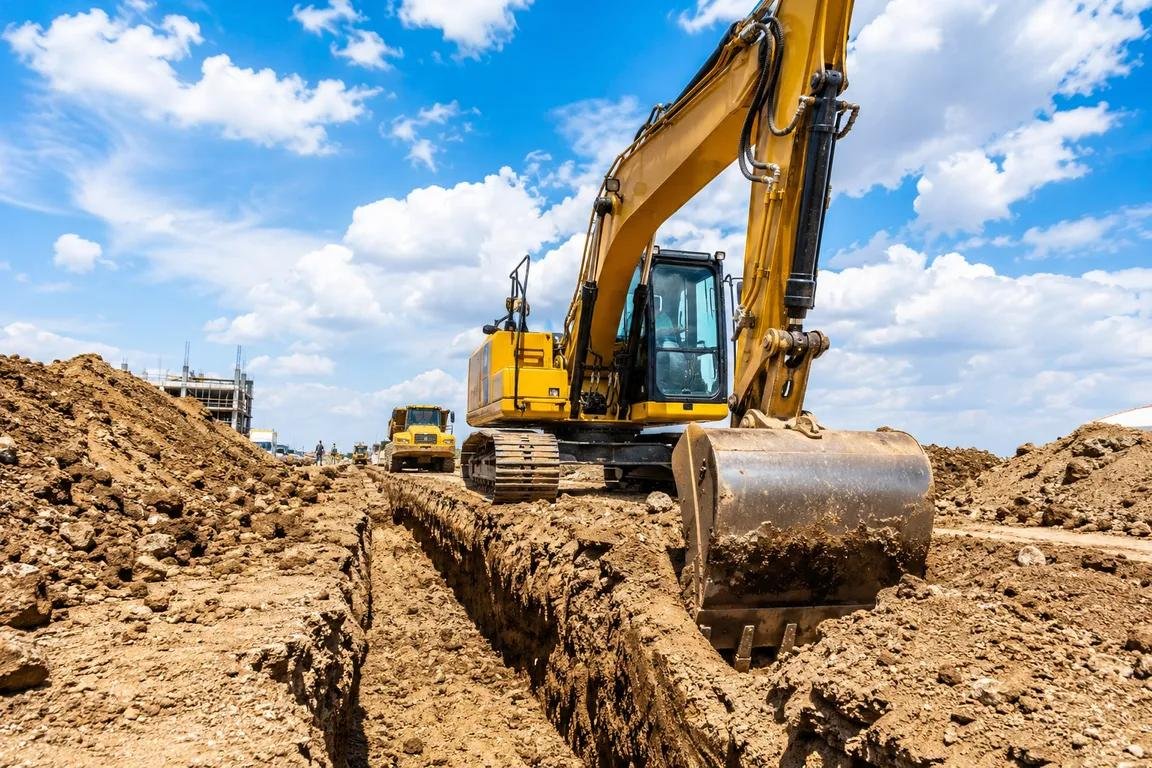
Learning how to excavate a construction site starts long before an excavator arrives. The team must understand the drawings, ground conditions, underground services, neighbouring structures, water risks and legal requirements. Excavation may be needed for foundations, basements, drainage, roads or utilities, and each purpose changes the method. A safe project combines competent planning, controlled digging, protective systems, inspection and a properly documented handover.
1. Define the excavation and read the design information
Begin by confirming exactly what must be excavated and why. The scope should identify the footprint, depth, width, formation level, working space, access route, spoil location and the sequence of follow-on work. A foundation excavation has different needs from a narrow service trench or a large basement. The design drawings should provide dimensions, levels, boundaries and information about adjacent structures. If plans conflict or a dimension is unclear, ask the designer or engineer for clarification before work begins.
Identify benchmarks and survey control points and decide who is authorised to set out the work. Protect reference marks from vehicles and plant. If excavation is close to a road, wall, building, railway, tree or watercourse, consider whether the work could remove support, alter drainage or cause settlement. A structural or geotechnical engineer may need to assess the effect on nearby assets before the method is approved.
2. Complete site investigation and risk planning
Review available geotechnical reports, previous site records, contamination surveys and utility plans. Check when they were prepared, what area they cover and whether the proposed design has changed. A site investigation can identify soil layers, rock, made ground, groundwater, buried obstructions and possible contamination. Conditions can vary across a relatively small plot, so a single trial pit or old report may not be enough for a complex project.
Prepare a method statement and risk assessment that address the excavation sequence, plant, temporary works, access, traffic management, exclusion zones, emergency arrangements and inspection regime. Identify who is responsible for approving changes and stopping work. Where required, obtain permits for road openings, drainage connections, groundwater discharge, environmental restrictions or protected areas. Planning should include labour, plant and temporary works costs; a useful related read is Heritage on the Hill’s guide to choosing contractors and controlling construction risk.
3. Locate underground utilities before digging
Buried electricity cables, gas pipes, water mains, fibre-optic lines, sewers and drainage systems can create life-threatening hazards if struck. Obtain current utility records and use the correct local notification system. In the United States, 811 is used to request marking of participating underground utilities before digging. It is not the system for every country. In the UK, contractors should follow the HSE’s safe-digging guidance and use utility plans, locating equipment and safe excavation methods.
Do not treat a map, marker paint or electronic locator as a guarantee of exact depth. Service records may be incomplete or inaccurate. Brief the site team on marked routes, establish restrictions and expose services cautiously where necessary. Mechanical excavation should not proceed blindly in a suspected service zone. If an unknown cable or pipe is uncovered, stop work, keep people away and contact the site supervisor and asset owner. Never assume a service is disconnected because it looks old or damaged.
4. Assess soil, groundwater and nearby loads
Soil stability depends on its type, moisture, layering, previous disturbance, cracks, vibration and the weight placed near the excavation. Dry ground can become unstable after rain, while saturated sand or loose fill can collapse unexpectedly. A competent person should inspect the ground and reassess it whenever conditions change. The visual appearance of a trench wall is not enough to decide that it is safe to enter.
Groundwater can soften the base, wash fine material from the sides, cause erosion or create uplift pressure. A dewatering plan should explain how water will be collected, pumped, treated and discharged. Pumping can affect neighbouring foundations or cause settlement, so an engineer may need to assess off-site effects. Direct rainwater away from the excavation and avoid allowing surface runoff to collect at the edge.
5. Prepare the site and choose suitable equipment
Set out the excavation boundary and establish barriers, warning signs, lighting, safe pedestrian routes and traffic management. Keep unauthorised people away. Separate pedestrians from reversing vehicles and provide a trained banksman or spotter where the operator’s view is restricted. Confirm emergency access and a safe route for workers who need to leave the excavation.
Choose equipment based on depth, ground conditions, site access, spoil volume and the proximity of utilities. Possible equipment includes excavators, backhoes, bulldozers, trenching machines, dumpers and vacuum excavation units. Check operator competence, plant condition, alarms, brakes, attachments and inspection records. Heavy plant and spoil heaps can overload the ground near an excavation edge, so their position must follow the design and site-specific assessment rather than a guessed universal distance.
6. Excavate in a controlled sequence
Follow the approved drawings and method statement. Remove topsoil separately if it is intended for reuse. Dig in stages or layers where this helps maintain stability and allows the surveyor or engineer to verify levels. Avoid over-excavating below the specified formation level. Removing too much material can lead to remedial work, engineered replacement or a redesign. Protect exposed formation from weather, traffic and unnecessary disturbance until the next activity begins.
For deeper excavations, the design may require sloping or benching, trench boxes, hydraulic shoring, sheet piles, soldier piles or other temporary support. The right system depends on soil, water, depth, nearby loads and the sequence of work. Do not improvise a support system or remove components because they interfere with production. OSHA’s construction excavation protective-system standard states that workers in excavations must generally be protected from cave-ins unless a listed exception applies, such as an excavation entirely in stable rock or certain excavations under five feet where a competent person finds no indication of a potential cave-in.
7. Protect people working in and around trenches
A trench collapse can bury a worker quickly and can be fatal even when the trench appears relatively shallow. Workers should not enter an unprotected trench because it looks dry or because another person has already entered. Use the protective system selected for the job and follow its installation and removal sequence. Provide appropriate ladders or other safe access where required, and never climb on shoring, excavator buckets or unsupported pipes to enter or leave.
Other hazards include falling materials, plant overturning, traffic, overhead lines, hazardous atmospheres, water accumulation and people falling into the excavation. Keep materials and equipment away from edges, use suitable barriers, and assess whether atmosphere testing is required near sewers, tanks, contaminated ground or other potential sources of gas. The OSHA trenching and excavation eTool provides practical information about cave-ins, access and inspection responsibilities. These references describe US requirements; projects elsewhere must follow the applicable local law.
8. Inspect before work and after changing conditions
Inspection is a continuous control, not a box to tick once. Under US OSHA rules, a competent person must inspect excavations, adjacent areas and protective systems before work starts, as needed throughout the shift and after rainstorms or other hazard-increasing events. Check for cracks, bulging, seepage, loose material, damaged support, plant loading, safe access and signs of movement. Workers should be encouraged to report changes immediately.
Stop work if the ground moves, water enters unexpectedly, shoring is damaged, an unrecorded service is found or the actual conditions differ materially from the approved method. Do not wait for a formal inspection time when an immediate hazard is visible. Record the inspection, defects, corrective action and any decision to keep people out of the excavation until it is safe again.
9. Manage spoil, dust and environmental impacts
Separate reusable topsoil, clean subsoil, rock, demolition debris and suspected contaminated materials where the specification or law requires. Keep spoil piles stable and away from excavation edges, drains and watercourses. Control dust, noise, vibration, mud tracking and runoff. Unexpected staining, odours, containers or suspect asbestos-containing materials should trigger a stop-work response and specialist assessment.
Waste classification and disposal depend on local environmental rules. Confirm whether excavated material can be reused on site, transferred to another approved site or must go to a licensed facility. Keep records of quantities, test results, transport documents and disposal receipts. Pumped water may need treatment or a discharge permit. Environmental controls should be included in the method statement and daily supervision.
10. Check formation, install services and backfill
When the required level is reached, arrange the specified inspection before covering the formation. Confirm dimensions, levels, bearing conditions and whether soft spots or water ingress need treatment. Foundation concrete should not be placed until the required engineer or inspector has accepted the formation. For drainage or utility trenches, verify bedding, alignment, gradient, joints and any required testing before backfilling.
Backfill with approved material and compact it in controlled layers using equipment suitable for the location. Avoid applying excessive pressure to retaining walls before the structure and temporary support arrangements allow it. Protect buried services with the correct surround and warning tape where required. Record as-built levels and service positions before they disappear beneath the surface. Once the excavation is complete, remove temporary barriers only when the area is safe and restore access, drainage and surfaces.
Common excavation mistakes
- Starting before utilities have been located and the permit-to-dig process is complete.
- Assuming soil that was stable yesterday will remain stable after rain or vibration.
- Placing a spoil heap or heavy plant too close to the edge.
- Allowing workers to enter a trench without suitable protective measures.
- Ignoring groundwater, adjacent foundations or environmental restrictions.
- Backfilling before required inspection, testing and as-built records are complete.
Frequently asked questions
How deep can a trench be without shoring?
There is no universal depth that is safe in every soil type or jurisdiction. Under US OSHA construction rules, protective systems are generally required at five feet or deeper unless the excavation is entirely in stable rock. An exception for some shallower excavations depends on a competent person’s examination. Local rules may differ.
Who is a competent person?
It is someone with training and experience to identify existing and predictable excavation hazards and authority to take prompt corrective action. A site should name this person and make their responsibilities clear.
Can an excavator work near the trench edge?
Only when the ground capacity, excavation design, plant position and working method make it safe. Heavy equipment can increase the chance of collapse, so edge distances must be assessed by a competent person or engineer.
What should happen if an unknown pipe or cable is found?
Stop work, keep people and equipment away and contact the supervisor and utility owner. Do not touch, move or cut the service.
Final thoughts
Knowing how to excavate a construction site means following a controlled process: define the work, investigate the ground, locate services, select equipment, protect workers, inspect changing conditions and complete the handover properly. Excavation is a high-risk activity, so use competent professionals and the local legal standards. Production targets should never replace a safe method or a decision to stop work when conditions change.
For related construction reading, see Heritage on the Hill’s guides to planning reliable home-improvement work and maintaining construction equipment.

Karen Altizer is a seasoned professional with a wealth of experience, skilled at crafting compelling narratives and strategic messages for diverse audiences.